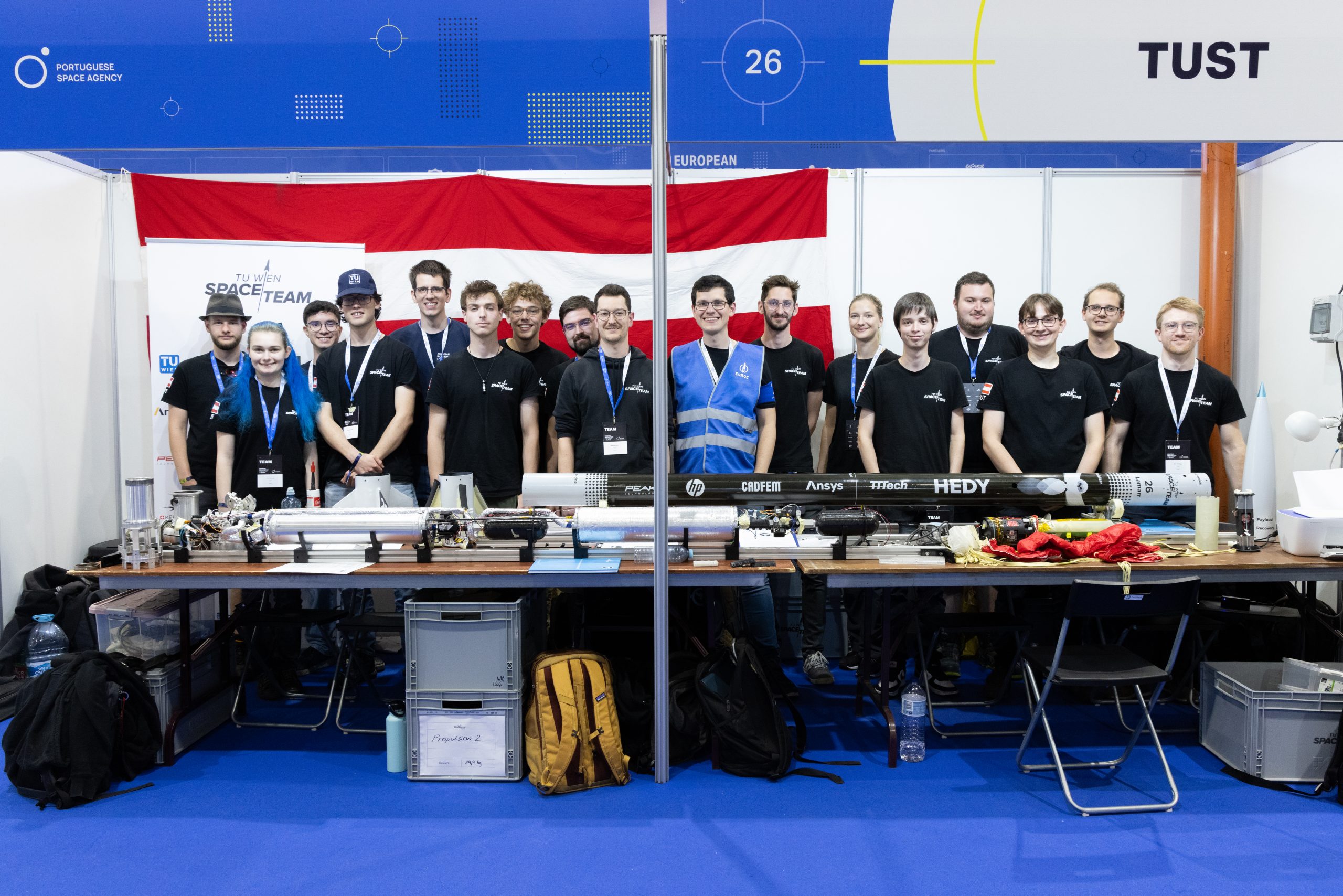
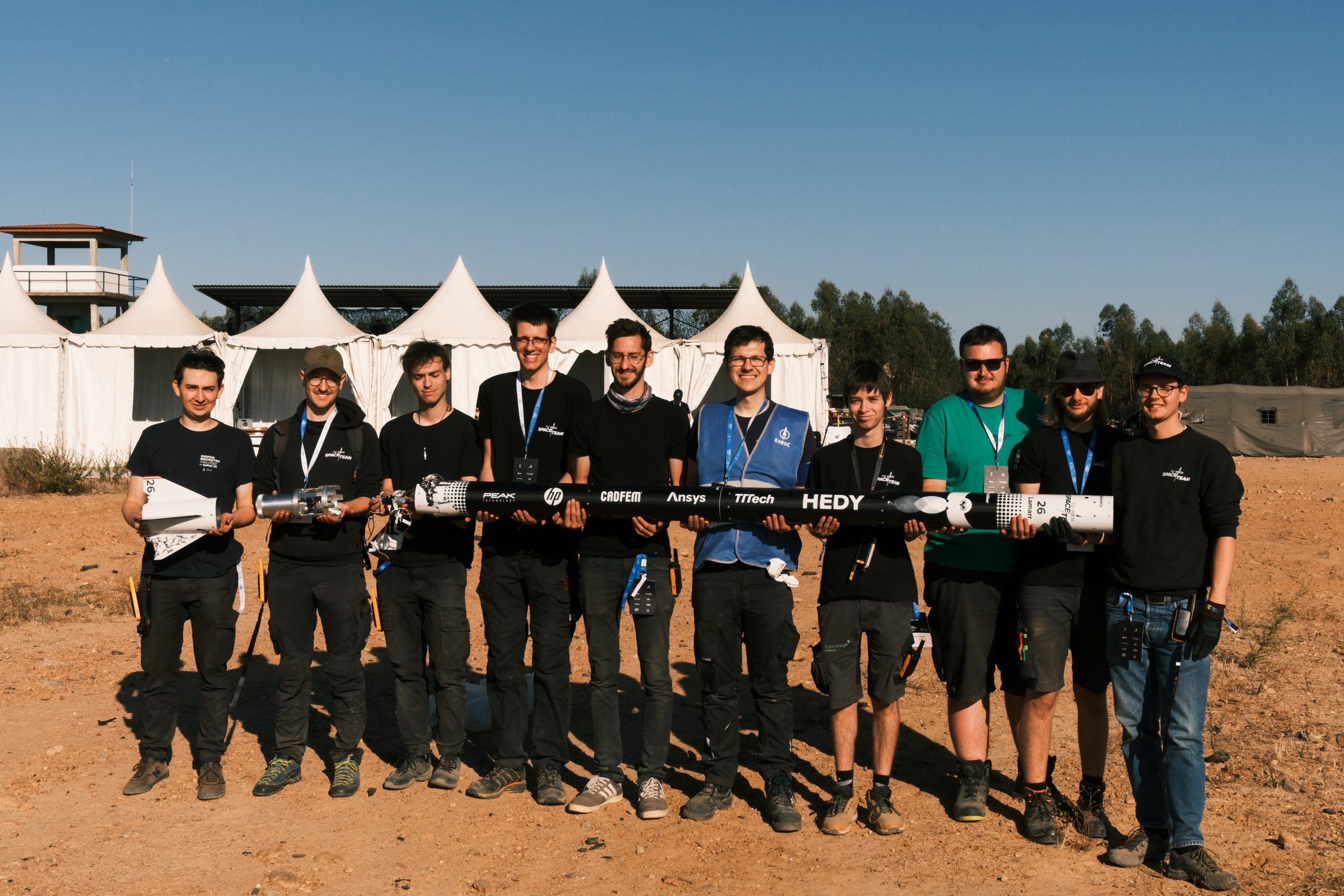
From October 9 to 15, 2025, the TU Wien Space Team participated in the European Rocketry Challenge (EuRoC) in Constância, Portugal, with its liquid-propellant rocket Hedy. After an intensive test campaign, months of preparation, and a challenging launch day, the team was able to celebrate a complete success: Hedy reached an altitude of 5,336 meters and broke the sound barrier at Mach 1.1. This achievement marked the highest flight in the Liquid 9 km category and the second-highest flight of the entire competition in 2025.
The project lamarr
Lamarr is the second liquid-propelled rocket project of the TU Wien Space Team and an important step in the further development of complex rocket technologies at the student level. Named after the Austrian inventor Hedy Lamarr, the project combines technological innovation, scientific precision, and interdisciplinary teamwork.
The goal of the project is the development of a pressure-fed bi-liquid rocket powered by ethanol and liquid oxygen, capable of reaching an altitude of up to nine kilometers while carrying a payload with a mass of 1 kg. The project places particular emphasis on in-house development, safety architecture, and the transfer of knowledge to future generations of students.
Propulsion, Design and Flight
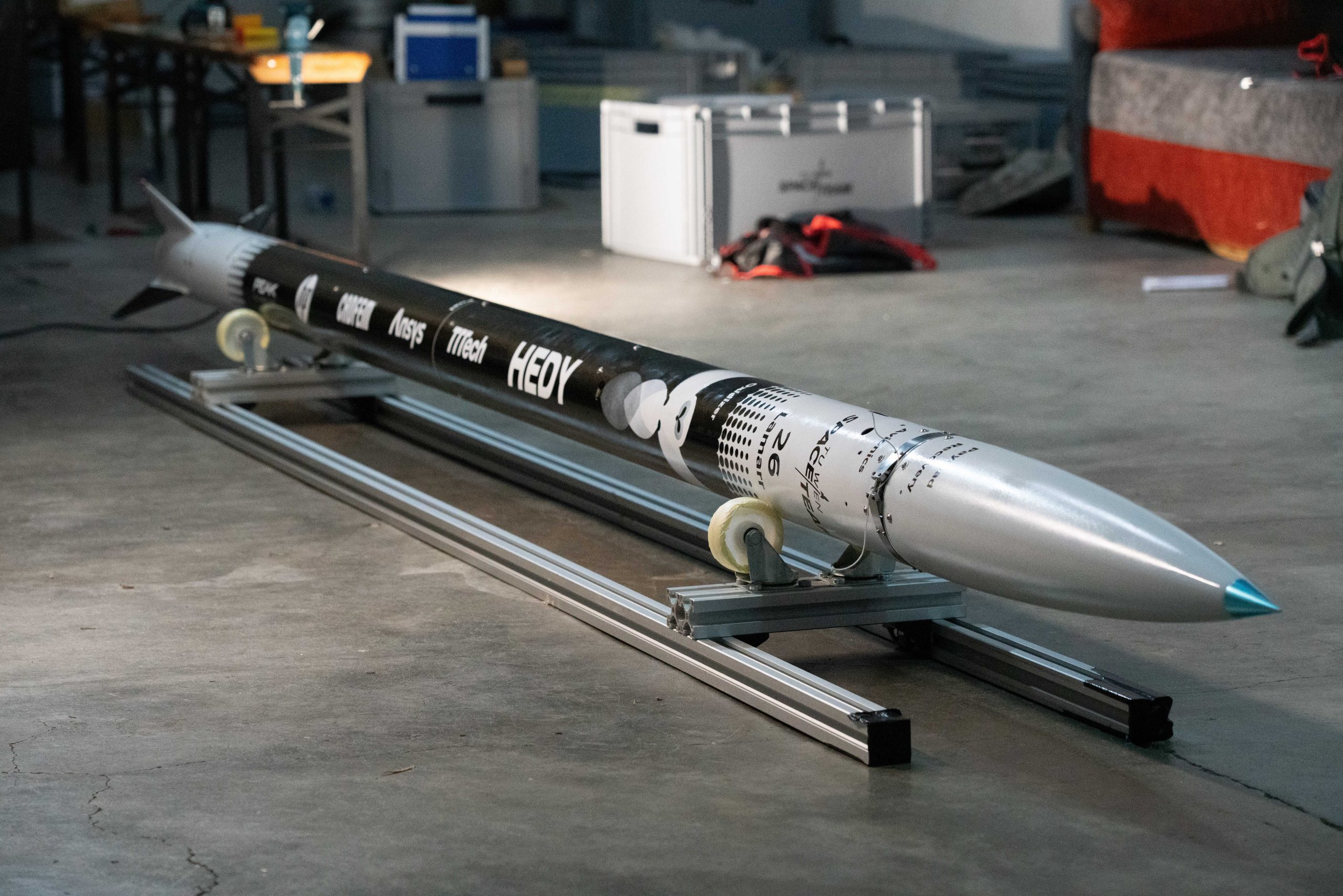
Hedy is powered by a self-developed, pressure-fed liquid rocket engine delivering a thrust of approximately 2,000 N. The carbon-fiber rocket airframe is optimized for minimal weight and high structural strength, making the rocket, at a dry mass of just 17.5 kg, by far the lightest in its category.
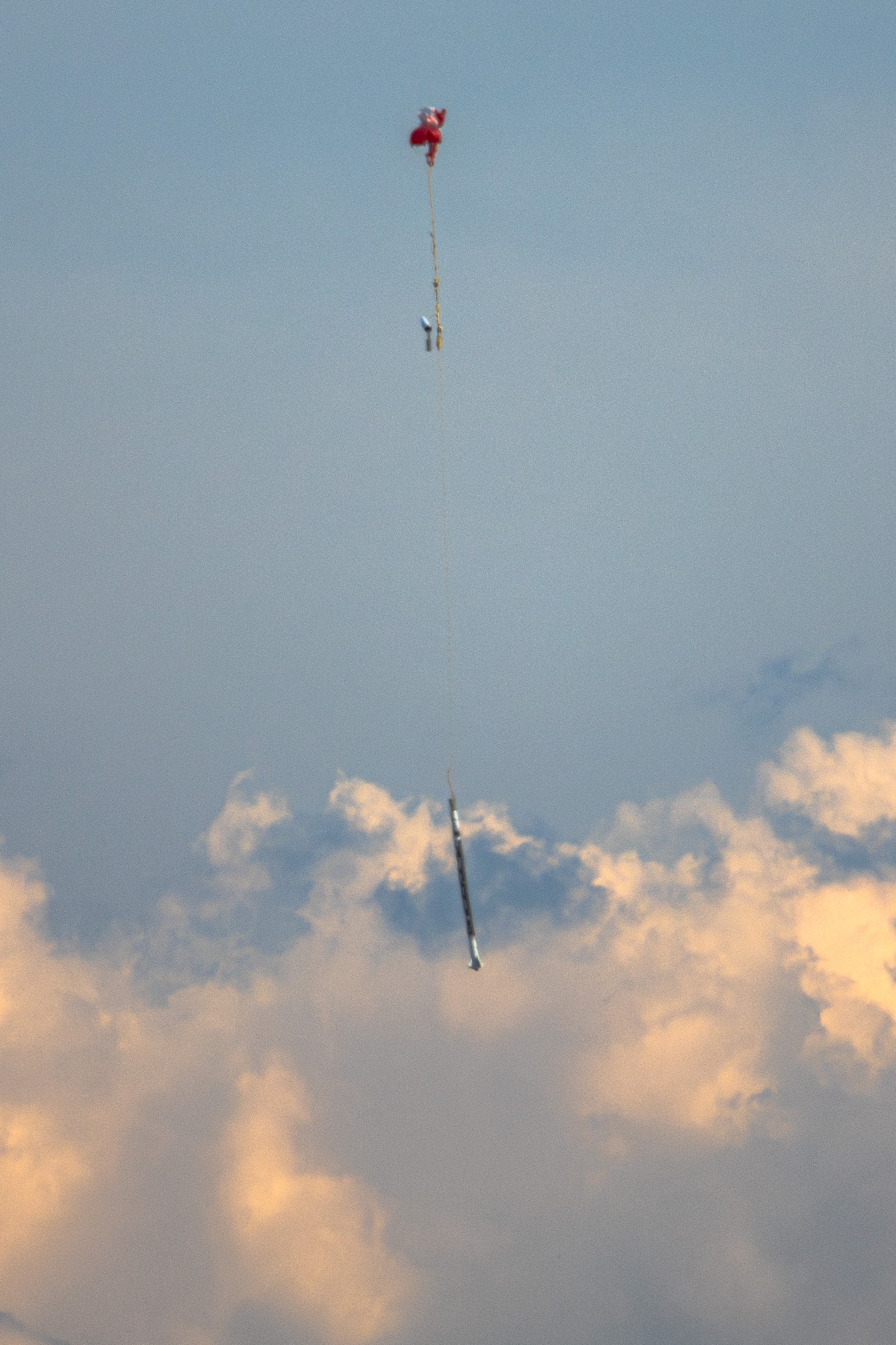
On October 12, 2025, at 6:04 p.m. local time, Hedy lifted off in Constância following a successful Flight Readiness Review and propellant loading. The flight was stable, telemetry data was transmitted continuously, and apogee was reached at 5,336 meters. The two-stage, non-pyrotechnic recovery system functioned partially as intended: the drogue chute deployed as planned, while the main parachute only partially deployed due to a malfunction. Nevertheless, the rocket landed in a controlled manner at approximately 90 km/h and was recovered with minor damage.
Despite some structural damage to the airframe and fins, all electronic systems, including valve control, most of the propulsion system, data logging, and telemetry, remained fully operational. This allowed the flight to be completely reconstructed and analyzed.
A Milestone for Student Spaceflight
The successful flight of Hedy marks a significant milestone for student liquid rocketry research in Austria. The TU Wien Space Team has demonstrated that complex liquid rocket technology can be successfully developed, tested, and launched at the university level. The flight data obtained provides valuable insights for future advancements in engine development, lightweight structures, and avionics.
Technical Data
- Project: Lamarr
- Rocket: Hedy
- Propellants: Ethanol / Liquid Oxygen (LOX)
- Propulsion: Pressure-fed liquid rocket engine (2 kN thrust, ~9 s burn time)
- Length: 3.7 m
- Diameter: 133 mm
- Dry mass: 17.5 kg
- Liftoff mass: 25 kg
- Maximum velocity: 370 m/s (1,300 km/h, Mach 1.1)
- Apogee: 5,336 m
- Recovery: Two-stage parachute system
- Location: Campo Militar de Santa Margarida, Constância, Portugal
- Date: October 12, 2025
Photos